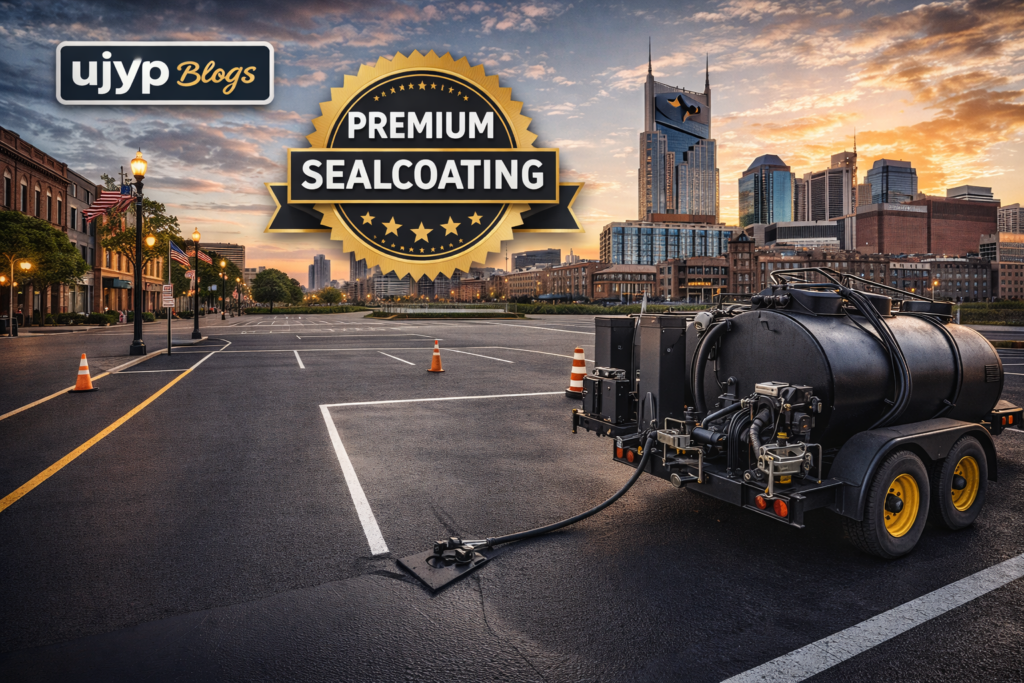
Downtown Nashville’s vibrant urban landscape pulses with energy from Broadway’s honky-tonks to the developing Gulch district, creating a dynamic environment where property maintenance standards directly impact business success and property values. From historic buildings along Second Avenue to modern high-rises transforming the skyline, property owners throughout the urban core face unique challenges maintaining asphalt surfaces that endure constant traffic, harsh weather cycles, and the demands of Tennessee’s climate extremes. Professional sealcoating services provide essential protection preserving pavement investments while maintaining the polished appearance downtown Nashville properties require.
Quality sealcoating transcends simple cosmetic improvement—it represents strategic infrastructure maintenance extending pavement life, preventing expensive premature replacement, and demonstrating the professional property management that tenants and customers expect. Understanding sealcoating benefits, application timing, and maintenance requirements helps downtown property owners and managers make informed decisions protecting their significant pavement investments while maintaining the standards that keep Nashville’s urban core thriving.
Downtown Nashville’s Unique Pavement Challenges
The urban heat island effect intensifies throughout downtown’s dense development where asphalt, concrete, and buildings absorb and radiate solar energy. Pavement temperatures regularly exceed air temperatures by 20-40°F during summer months, accelerating asphalt oxidation and creating conditions where unprotected pavement ages prematurely. This accelerated deterioration makes protective sealcoating especially critical for downtown properties compared to suburban locations with more vegetation and shade moderating temperature extremes.
Traffic volumes throughout the downtown district create constant wear on parking lots and access drives. Pedestrian-heavy areas around Broadway, honky-tonk districts, and entertainment venues experience vehicle traffic patterns different from typical commercial properties—frequent starting, stopping, and turning in confined spaces generate stress concentrating wear in specific areas. Heavy delivery trucks servicing downtown businesses compound this wear, requiring pavement protection strategies addressing these unique usage patterns.
Tennessee’s dramatic weather cycles test pavement durability through freeze-thaw cycles, intense summer heat, and occasional severe storms. Winter temperatures dropping below freezing followed by warm spells create expansion-contraction cycles that crack unprotected asphalt. Heavy rainfall events test drainage systems while saturating any cracks or surface imperfections. UV exposure during long summer days breaks down asphalt binder, creating brittle surfaces prone to cracking. Sealcoating provides critical protection against these climatic stresses.
Salt and de-icing chemicals used during winter weather events accelerate pavement deterioration through chemical reactions with asphalt binder. While Nashville’s winters remain relatively mild compared to northern cities, occasional ice and snow require treatment creating exposure that degrades unprotected asphalt. Downtown’s heavy pedestrian traffic increases de-icer application protecting walkways and access points, intensifying chemical exposure that sealcoating helps mitigate.
Understanding Sealcoating Benefits and Protection
Sealcoating creates protective barriers shielding asphalt from oxidation—the primary cause of pavement aging and deterioration. UV radiation from sunlight breaks chemical bonds in asphalt binder, causing surfaces to become gray, brittle, and prone to cracking. Sealcoating blocks UV penetration, maintaining asphalt flexibility and dark color while preventing the oxidative aging that shortens pavement life. Properties with regular sealcoating schedules experience 50-100% longer pavement life compared to unsealed surfaces.
Water infiltration through cracks and surface voids causes extensive subsurface damage destroying pavement from beneath. Moisture saturates base materials reducing load-bearing capacity, creates freeze-thaw damage in cold weather, and allows progressive deterioration that eventually requires expensive reconstruction. Sealcoating fills small surface voids and provides water-resistant barriers preventing infiltration while crack sealing addresses larger openings, together creating comprehensive moisture protection.
Chemical resistance protects asphalt from automotive fluids that dissolve binder and create pavement failures. Gasoline, oil, transmission fluid, and other petroleum products soften asphalt allowing aggregate to dislodge under traffic. Downtown parking facilities with high vehicle turnover experience frequent small spills that accumulate damage over time. Sealcoating creates chemical-resistant surfaces that facilitate cleanup while preventing penetration that causes permanent pavement softening.
Aesthetic enhancement through sealcoating’s rich black appearance significantly improves property presentation. Fresh sealcoating creates smooth, uniform surfaces that appear newly paved at fractions of replacement costs. This visual improvement affects customer perceptions, property values, and competitive positioning—particularly important in downtown Nashville where property appearance directly influences business success. The professional appearance communicates quality and attention to detail that attracts tenants and customers.
Professional Sealcoating Application Process
Quality sealcoating begins with thorough surface preparation determining application success and longevity. Contractors power wash or blow clean pavement removing all dirt, debris, vegetation, and loose material. They repair significant cracks and potholes ensuring smooth, sound surfaces for sealer application. Oil spots receive primer treatment allowing sealer adhesion over contaminated areas. This comprehensive preparation ensures proper sealer bonding and uniform appearance that rushed applications cannot achieve.
Crack filling precedes sealcoating, addressing openings that allow water infiltration and progressive pavement damage. Professional crack sealing uses hot-applied rubberized materials that remain flexible through temperature cycles, moving with pavement expansion and contraction without breaking bonds. Contractors clean cracks thoroughly, removing vegetation and debris, then fill completely creating watertight seals. This critical preparation step prevents the premature sealcoating failure that occurs when moisture infiltrates through unsealed cracks.
Sealer application requires proper weather conditions and careful technique ensuring uniform coverage and adequate thickness. Contractors apply coal tar emulsion or asphalt emulsion sealers using spray equipment for large areas or squeegee application for smaller spaces and detail work. Two thin coats typically provide better protection than single heavy applications, allowing proper drying between coats. Professional application achieves consistent thickness throughout entire surfaces avoiding the thin spots and pooling that compromise protection and appearance.
Edge work and detail finishing demonstrate installation quality and professionalism. Contractors carefully cut edges along building foundations, curbs, and landscaping creating clean, straight lines. They protect adjacent surfaces including concrete walkways, building facades, and landscaping from overspray or spills. Parking lot striping gets refreshed after sealcoating cures, creating crisp markings that enhance both safety and appearance. These finishing details separate professional work from amateur applications that save time but sacrifice quality.
Why Downtown Nashville Properties Need Specialized Expertise
Downtown Nashville’s property types range from historic structures to modern developments, each presenting unique access and application challenges. Limited working hours to avoid disrupting business operations require efficient contractors maximizing productivity during available windows. Parking garages with multiple levels demand different approaches than surface lots. Mixed-use developments need coordination between commercial tenants, residential occupants, and property management. An experienced Sealcoating Contractor downtown nashville understands these complexities, delivering quality work within operational constraints that challenge less-experienced providers.
Metropolitan regulations governing downtown construction and maintenance require compliance expertise. Noise ordinances restrict equipment operation hours. Environmental regulations govern runoff management and cleaning practices. Right-of-way work near streets requires permits and traffic control plans. Contractors familiar with Nashville’s specific requirements navigate these regulations efficiently, preventing delays and violations that plague operators unfamiliar with local standards.
Traffic management during sealcoating application protects both workers and business operations. Downtown locations require careful planning maintaining customer access, managing employee parking, and coordinating with adjacent properties sharing access drives. Professional contractors develop comprehensive traffic control plans, communicate clearly with property managers and tenants, and execute work minimizing disruption while maintaining safety throughout application and curing periods.
Material selection appropriate to Tennessee’s climate ensures optimal performance and longevity. Coal tar emulsions provide superior chemical resistance and durability in heavy-traffic applications. Asphalt emulsions offer environmental advantages and perform well in moderate-use areas. Additives enhance performance characteristics including drying time, flexibility, and wear resistance. Experienced contractors recommend materials optimized for each property’s specific use patterns and exposure conditions.
Investment Considerations and Value Protection
Sealcoating costs typically range $0.15-0.30 per square foot depending on surface condition, required repairs, and sealer specifications. A 10,000 square foot parking lot—common for small downtown commercial properties—costs approximately $1,500-3,000 for professional two-coat application including crack filling and surface preparation. This investment extends pavement life 3-5 years per application, dramatically reducing annualized pavement costs compared to premature replacement.
Preventive maintenance through regular sealcoating reduces total pavement ownership costs by 50% or more over pavement life cycles. Unsealed asphalt typically requires replacement after 10-15 years of service. Properties with sealcoating every 2-3 years extend pavement life to 20-30 years before reconstruction becomes necessary. The cumulative cost of six sealcoating applications over 20 years totals far less than complete pavement replacement that neglected surfaces require after half that service period.
Property value enhancement justifies sealcoating investments beyond simple pavement protection. Well-maintained parking areas signal professional property management that attracts quality tenants and supports premium lease rates. Customer-facing businesses benefit from attractive parking that creates positive first impressions supporting sales and repeat visits. Property appraisals reflect maintenance quality with well-maintained pavement contributing to higher valuations affecting both sale prices and refinancing capabilities.
Liability reduction through improved pavement condition protects property owners from premises liability claims. Cracks, potholes, and uneven surfaces create trip hazards and vehicle damage risks exposing owners to injury claims and lawsuits. Regular sealcoating prevents the deterioration that creates these hazards while demonstrating the proactive maintenance that helps defend against claims when incidents occur. This liability protection adds value beyond simple pavement preservation.
Timing and Scheduling Considerations
Optimal sealcoating timing balances weather requirements with property operational needs. Applications require temperatures above 50°F during application and throughout 24-48 hour curing periods. No rain should be forecast for 24 hours minimum after application. These conditions make spring and fall ideal in Nashville’s climate—summer’s extreme heat accelerates drying but may be uncomfortably hot for workers, while winter’s cold prevents proper curing.
New asphalt requires 6-12 months curing before initial sealcoating, allowing volatile oils to escape and pavement to oxidize slightly improving sealer adhesion. Premature sealcoating traps these oils creating surface problems and preventing proper sealer bonding. After initial curing, establish regular 2-3 year sealcoating schedules maintaining protection throughout pavement life. Consistent schedules prove more effective than sporadic applications responding only after deterioration becomes obvious.
Business operations influence scheduling as much as weather conditions. Retail properties schedule during slow periods minimizing customer impact. Office buildings coordinate during weekends or holidays when parking demand drops. Restaurants and entertainment venues work around peak business hours protecting revenue while allowing adequate cure time. Professional contractors develop detailed schedules coordinating with property managers ensuring work proceeds efficiently without unnecessarily disrupting operations.
Multi-property portfolios benefit from programmed maintenance schedules spreading sealcoating across multiple years. Rather than attempting to sealcoat all properties simultaneously—creating budget spikes and management challenges—establish rotations where portions of portfolios receive service annually. This approach smooths budgets, maintains consistent property appearance across portfolios, and develops predictable relationships with contractors delivering consistent quality.
Maintenance Best Practices Between Applications
Regular inspections identify developing problems before they compromise sealcoating protection. Walk parking areas quarterly checking for new cracks, areas showing wear, or drainage problems. Address issues promptly—crack sealing, pothole repair, and drainage corrections prevent minor problems from becoming expensive failures. These inspections take minimal time but provide early warning preventing the accelerated deterioration that occurs when problems go unnoticed until severe.
Surface cleaning extends sealcoating life while maintaining professional appearance. Sweep or power wash parking areas removing dirt, debris, and organic material. Clean automotive fluid spills immediately preventing penetration through sealcoating. Remove vegetation growing through cracks before roots expand damage. These simple cleaning practices preserve both sealcoating integrity and property aesthetics between professional applications.
Drainage maintenance prevents water damage that destroys pavement regardless of sealcoating quality. Keep catch basins and drains clear of debris allowing proper water flow. Maintain positive surface grades directing water toward drainage points rather than allowing ponding. Address settling creating low spots where water accumulates. Water represents pavement’s greatest enemy—proper drainage prevents most premature failures independent of sealcoating schedules.
Traffic management protects sealcoating from premature wear in high-stress areas. Direct delivery trucks and heavy vehicles along designated routes preventing concentrated wear in unintended areas. Install wheel stops or barriers preventing vehicles from overhanging landscape areas or damaging edges. Consider bollards or barriers protecting sealcoating from vehicular impacts near building entrances. These protective measures extend sealcoating life in areas experiencing abuse that accelerates normal wear.
Environmental Responsibility in Sealcoating
Coal tar sealcoating has faced environmental scrutiny due to polycyclic aromatic hydrocarbons (PAHs) in runoff, leading some jurisdictions to restrict or ban its use. While coal tar provides superior performance characteristics, environmental concerns drive many property owners toward asphalt emulsion alternatives. Nashville currently allows coal tar sealers, but environmentally conscious property owners increasingly choose asphalt emulsions balancing performance with reduced environmental impact.
Asphalt emulsion sealers provide environmentally preferable alternatives with acceptable performance in most applications. These water-based products contain lower PAH levels, produce less odor during application, and biodegrade more readily than coal tar alternatives. While not matching coal tar’s chemical resistance and durability in extreme applications, asphalt emulsions perform well for typical parking lots and driveways with proper maintenance schedules compensating for slightly shorter service intervals.
Runoff management during and after application protects water quality and demonstrates environmental responsibility. Contractors prevent sealer from entering storm drains during application through barriers and careful technique. They allow adequate curing before rainfall exposure preventing fresh sealer from washing into waterways. Properties with sensitive drainage considerations implement bioswales or filtration systems treating runoff before discharge, protecting water quality while maintaining pavement protection benefits.
VOC-compliant formulations meet air quality standards while delivering effective pavement protection. Low-VOC and zero-VOC sealers reduce emissions improving air quality during application and curing. These environmentally advanced products may cost slightly more but support sustainability goals increasingly important to corporate tenants and environmentally conscious consumers. Professional contractors offer various formulations allowing property owners to balance performance, environmental impact, and budget considerations.
Selecting Qualified Sealcoating Professionals
Experience with commercial properties demonstrates capability handling downtown Nashville’s unique demands. Request references from similar properties—parking garages, retail centers, office buildings—then verify those references checking performance, professionalism, and problem resolution. Multiple positive experiences with comparable projects indicate consistent quality and capability managing the logistical challenges that downtown locations present.
Professional certifications indicate technical knowledge and industry commitment. Pavement Maintenance Certification through industry organizations demonstrates formal training in best practices. Manufacturer certifications for specific sealer products indicate expertise with those materials. Safety certifications including OSHA compliance show commitment to worker and public safety. While certifications don’t guarantee quality, they indicate professionalism exceeding minimal requirements.
Insurance coverage protects property owners from liability during sealcoating operations. Verify contractors carry comprehensive general liability insurance covering property damage and bodily injury. Workers compensation protects against liability for worker injuries. Pollution liability insurance addresses environmental claims from spills or runoff issues. Request certificates documenting all coverage and verify policies directly with insurance carriers before allowing work to proceed.
Detailed proposals protect both parties through clear documentation of expectations and deliverables. Proposals should specify surface preparation methods, repair scope, sealer type and application rate, number of coats, curing requirements, and striping services. Include project timeline, traffic management plans, and communication protocols. Vague estimates hide assumptions creating dispute opportunities—comprehensive specifications establish shared understanding preventing misunderstandings that create dissatisfaction despite quality work.
Your downtown Nashville property deserves sealcoating services executed with the expertise and professionalism that protects pavement investments while maintaining the polished appearance supporting business success.
Frequently Asked Questions
How often should commercial parking lots be sealcoated? Most commercial properties benefit from sealcoating every 2-3 years depending on traffic volume and exposure conditions. High-traffic areas may require more frequent applications while protected locations extend intervals. Regular inspections determine optimal timing based on actual pavement condition rather than rigid schedules.
Can sealcoating be applied in winter? Sealcoating requires temperatures above 50°F during application and throughout 24-48 hour curing periods with no rain forecast. Nashville’s mild winters occasionally provide suitable conditions, but spring and fall offer most reliable weather. Winter applications risk improper curing that compromises performance and longevity.
How long before parking areas can reopen after sealcoating? Typical cure time allows light foot traffic after 4-6 hours and vehicle traffic after 24-48 hours depending on weather conditions, sealer type, and application thickness. Contractors provide specific guidance based on actual conditions. Rushing reopening risks tracking and damage to fresh sealcoating.
Does sealcoating fix cracks and potholes? Sealcoating fills hairline cracks and minor surface imperfections but does not repair significant damage. Cracks wider than hairline and all potholes require proper repair before sealcoating. Quality contractors include necessary repairs in proposals ensuring pavement receives both repair and protection.
What’s the difference between coal tar and asphalt emulsion sealers? Coal tar provides superior chemical resistance and durability but raises environmental concerns due to PAH content. Asphalt emulsion offers environmentally preferable alternatives with acceptable performance in most applications. Choice depends on traffic patterns, exposure conditions, environmental priorities, and budget considerations.