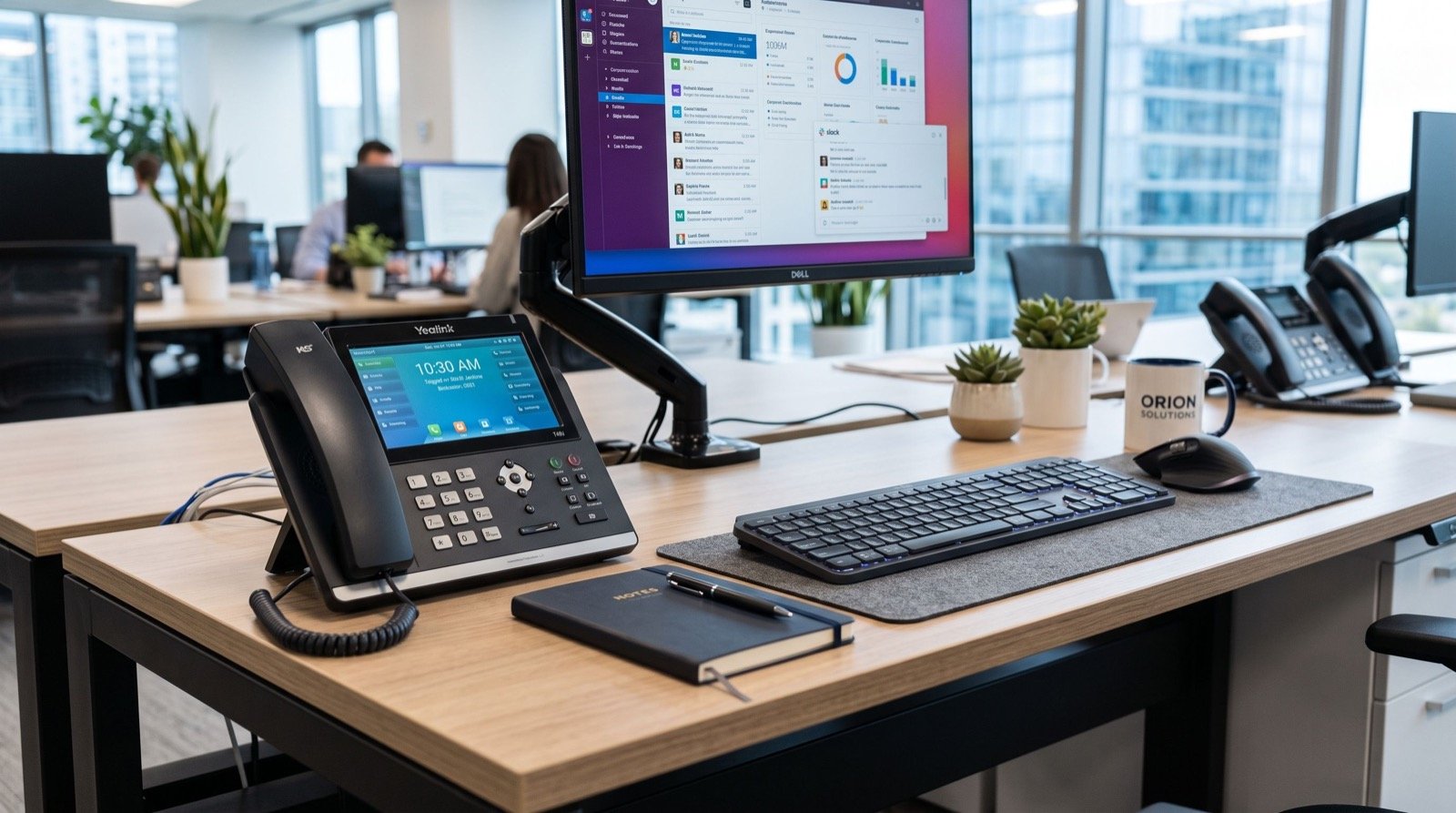
Choosing the right contact centre headsets is one of the fastest ways to lift call quality, agent comfort, and first-call resolution in 2026. Yet many operations still treat headsets as an afterthought, bolting cheap models onto expensive VoIP platforms and then wondering why customers complain about muffled audio. The headset is the single point where your telecom investment meets the human voice, so it deserves real attention.
Drawing on hands-on experience fitting out call floors and retail service desks, this guide explains what separates a professional headset from a consumer one, how noise cancellation actually works, and how the right peripherals tie a modern service operation together. By the end you will know exactly what to specify.
Why Contact Centre Headsets Make or Break Call Quality
A great VoIP system can still sound terrible if the headset is weak. Clarity, noise handling, and comfort all flow through this one device, and each of them directly affects customer perception.
Agents wear headsets for hours, so ergonomics are not optional. A poorly padded band or a stiff microphone boom leads to fatigue, more sick days, and lower morale on the floor.
The three pillars of a professional headset
- Audio clarity: Wideband sound so voices come through crisp, not tinny.
- Noise cancellation: A boom mic that isolates the speaker from floor chatter.
- Comfort: Lightweight build, breathable cushions, and adjustable fit.
How Does Noise-Cancelling Technology Actually Work?
Noise cancellation splits into two jobs: keeping background noise out of what your customer hears, and keeping distraction out of what your agent hears. Both rely on smart microphone and speaker design.
On the microphone side, a noise-cancelling boom uses directional pickup to capture the agent’s voice while rejecting sound from the sides. On the speaker side, acoustic shielding and, in premium units, active noise cancellation dampen ambient roar.
Passive versus active noise handling
- Passive: Physical padding and ear cups block sound. Affordable and reliable.
- Active (ANC): Electronics generate an anti-noise signal to cancel low hums. Best for loud open-plan floors.
- Hybrid: Combines both for the busiest environments.
Wired vs Wireless: Which Headset Suits Your Floor?
The wired-versus-wireless decision shapes cost, mobility, and battery logistics. Neither is universally better; it depends on how your agents work.
Use the comparison below to match a headset class to your operation before you commit to a bulk order.
| Feature | Wired Headset | Wireless (DECT/Bluetooth) |
|---|---|---|
| Mobility | Tethered to desk | Free movement up to ~100m (DECT) |
| Battery | None needed | Requires charging cycles |
| Cost | Lower upfront | Higher upfront |
| Best for | Fixed desks, high density | Supervisors, hybrid agents |
| Audio stability | Very stable | Excellent on DECT, good on BT |
| Interference risk | None | Low on DECT bands |
Matching the headset to the platform
Compatibility matters as much as the spec sheet. Confirm the headset is certified for your softphone or IP desk phone so features like remote call answer work out of the box.
For teams that want the whole stack specified, installed, and supported correctly, engaging quality service providers avoids the mismatch headaches that plague DIY rollouts.
Beyond Headsets: Peripherals That Complete the Service Desk
A headset rarely works alone. Retail help desks, telecom shops, and warehouses pair audio gear with scanning and point-of-service hardware for a seamless workflow.
Barcode scanners are a prime example. A fast, tolerant imager keeps queues short and agents focused on the customer rather than fighting with a stubborn scan.
Choosing a proven corded headset
For counters that handle everything from loyalty cards to phone-screen barcodes, a rugged imager pays for itself. The Honeywell Voyager XP 1470g is a popular choice because it reads damaged and on-screen codes quickly, keeping service moving.
The same efficiency mindset extends outdoors. Quick-service restaurants use audio headsets and lane timing together, and a well-tuned HME Drive Thru in Riyadh deployment shows how clear communication hardware directly speeds up every order.
Buying Tips: Getting Audio Quality Right the First Time
Smart procurement saves money and prevents re-orders. A few disciplined steps make all the difference between a smooth rollout and a drawer full of rejected headsets.
Always pilot before you scale. Let ten agents wear a shortlisted model for a full week on the real floor, then gather honest feedback on comfort, mic placement, and audio. Cushion preference varies more than any spec sheet suggests, and a week of genuine use prevents an expensive fleet-wide mistake that no return policy fully undoes.
Standards bodies underpin the audio you hear. Wideband voice quality is defined in specifications from the ITU-T, and connectivity certifications from the Bluetooth SIG confirm reliable wireless pairing.
A five-step buying checklist
- Confirm platform certification for your softphone or IP phone.
- Test a sample unit on the actual noisy floor, not a quiet showroom.
- Prioritise a noise-cancelling boom mic for open-plan spaces.
- Check warranty length and local support availability.
- Standardise on one or two models to simplify spares and training.
One practical tip from real rollouts: buy a small pilot batch before committing to a full floor. Let ten agents wear the shortlisted headsets for a week, because cushion preference and mic placement vary far more than any spec sheet suggests.
Frequently Asked Questions
Are wireless contact centre headsets worth the extra cost?
For supervisors and hybrid agents who move around, yes. DECT wireless offers long range and stable audio. For fixed high-density desks, wired models remain the cost-effective and dependable choice.
How important is a noise-cancelling microphone?
Very. In any open-plan environment, a noise-cancelling boom mic keeps background chatter out of the call, which lifts clarity, professionalism, and first-call resolution.
Do headsets need to be certified for my phone system?
Ideally yes. Certification ensures full compatibility, so features like call answer and volume control work correctly without dropouts or setup workarounds.
Can the same supplier provide headsets and biometric access?
Often, yes. A single telecom and IT hardware partner can supply headsets, biometric fingerprint scanners, and access control, which simplifies support and keeps everything compatible.
Conclusion: Invest in the Voice Your Customers Hear
The right contact centre headsets sharpen every conversation, protect agent comfort, and quietly raise customer satisfaction across 2026. Pair them with dependable scanners and lane hardware and your whole service operation runs smoother.
Ready to upgrade? Trial a certified headset on your busiest floor this week, standardise your spec, and source from a partner who supports the full peripheral stack. Better audio starts with one smart decision.